




Field notes: fumigation, herbs and alternative photographic processes
Inspired by historical fumigation and herbal remedies, I’ve been experimenting with using different botanical cyanotype toners inspired by the recipe books in the Wellcome Collection (including Lady Ann Fanshawe). I’m then using these toners to produce unique toned cyanotype artworks from collection images. I’m also creating anthotypes, using herbal emulsions. You can see some examples below.
With thanks to Julia Nurse (Research Development Lead at the Wellcome Collection) for support with identification of historical herbal recipes.
A note on fumigation
For much of history, the womb was seen as an unpredictable and misbehaving organ, responsible for a wide range of physical and emotional complaints. One common treatment was fumigation.
Through my research of the collection, and external sources, I’ve found that treating the womb through smell started very long ago! The Kahun Gynaecological Papyrus (also known as The Petrie Papyri) dated c. 1825 BCE, is actually one of the earliest surviving medical texts focussing on women's health and apparently one of the first to describe the ‘wandering womb’. It describes a range of gynaecological conditions alongside their diagnosis and treatment. This author describes how the Kahun Papyrus also records an early fertility test where a garlic clove was placed in the vagina overnight. The idea was if its odour could be detected on the woman's breath by morning, she was fertile, reflecting the belief that smells could travel through the body and reveal the condition of the womb.
This writer suggests that the Hippocratic gynaecological texts around 4 - 5 BCE also describe the use of both fragrant and offensive odours to diagnose and treat disorders of the womb, continuing the belief that smell could influence a womb’s position and behaviour. But around this time, excrement like cow dung also appear in a number of remedies intended to warm, cleanse or restore the womb. Lovely. They go on to quote Totelin (2009):
Diseases of Women (DW) 2.195, L 8.376 (Totelin 2009, 253):
Another fumigation: it is necessary to dig a hole and to roast grape stones, in the amount of two Attic choinikes; let him throw some of this ash in the hole, continuously dropping sweet-smelling wine. Seating herself around <the hole> and taking her legs apart, let her be fumigated.
Physicians in the early modern period also thought that the womb reacted to smells: nice aromas would encourage it back to its ‘natural’ position, and bad smells would drive it away from the upper body. Women were encouraged to inhale pretty grim substances, like bitumen, while fragrant spices and herbs were burned beneath the body so that the scented smoke could be drawn towards the womb. Mercury was even used in fumigations, particularly in the treatment of venereal disease, exposing women to poisonous vapours when the toxic effects were unknown.
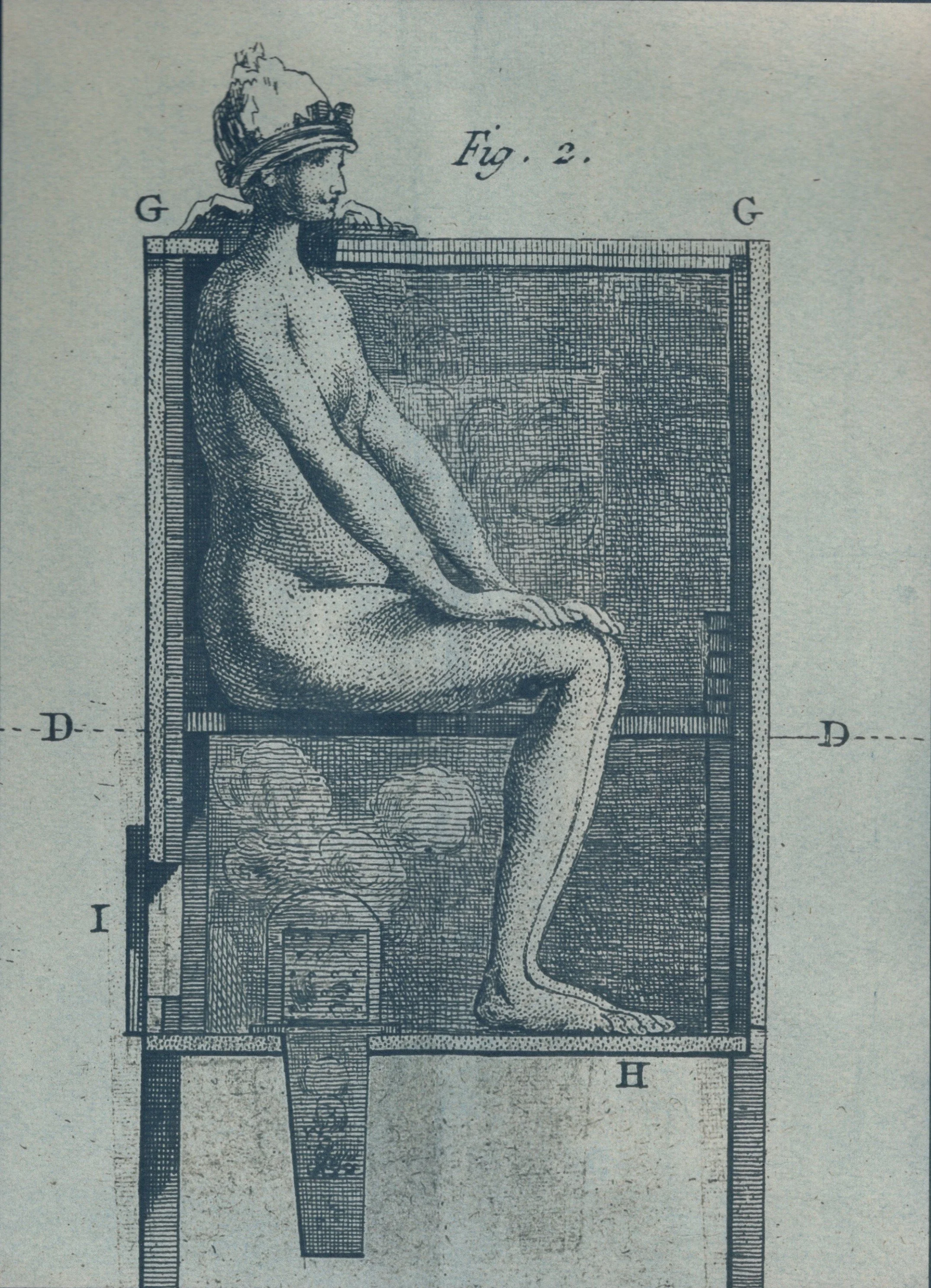
We’ve also seen various technical drawings and equipment used for fumigation treatments during our research for this project including chairs, and tubes. We’ve seen incense burners containing smouldering aromatic compounds, with a funnel directing the perfumed smoke upwards. Another instrument we found, secured to the waist with a ribbon, was designed to keep an open passage to the womb, allowing supposed harmful vapours to escape while medicinal fumes entered.
In addition to vaginal fumigation, we’ve found a whole world of using vapour baths to relieve gynae complaints. Like this example in Sheffield, where a woman’s ‘disease of the uterus’ was ‘cured’ by the miracle of steam.
Whilst vaginal fumigation is still used today, it’s not recommended by medical professionals.
_____________________________________________
Herb tested for botanical toner: Camomile
Toning rating: Excellent
Colour: Greeny-yellow
Historical complaint: Melancholy
Recipe: Sr Myrrice Williams directions & course of physick (?) curedy (?) Lady Hubbert of Mellaneholy. Shefumemge Lack for the heade.
Method: Take Manorum Mint, stachodos & cowslipps of each one handfull; Camomil & bettauy flowers as much as you can how betweene twoe fingers, & a thumbe, of Calamses aromanticey and Cypresse roote of each twoe drachmes; enfuse & boile theise in white wine & sage water each a quart till the third part bee consumed; then straine it and forment the party with a spange.
Wellcome Collection reference: Sarah Hughes, Ms.363
______________________________________________
Herb tested for botanical toner: Red sage
Toning rating: Excellent
Colour: Dark gray-black
Historical complaint: Headache
Recipe: A fume for the head
Method: Take Rosemary, sage and wormewood of each a good handfull boile them in a pottle of redeowes milke till it come to a quart then put in a handfull of Cummin seeds, bruised and stirre it about, put it into a narrow mouthed pot, and hold the mouth of the pot close to your Eare, an hower at night when you goe to bead, use it 6 . or 7 nights together, the same liquor will serue.
Wellcome Collection reference: Sarah Hughes, Ms.363
______________________________________________
Herb tested for botanical toner: Rosemary
Toning rating: Average
Colour: Grey-purple
Historical complaint: Headache
Recipe: A fume for the head
Method: Take Rosemary, sage and wormewood of each a good handfull boile them in a pottle of redeowes milke till it come to a quart then put in a handfull of Cummin seeds, bruised and stirre it about, put it into a narrow mouthed pot, and hold the mouth of the pot close to your Eare, an hower at night when you goe to bead, use it 6 . or 7 nights together, the same liquor will serue.
Wellcome Collection reference: Sarah Hughes, Ms.363
_____________________________________________
Herb tested for botanical toner: Green Tea
Toning rating: Excellent
Colour: Purple
Historical complaint: Brain stimulant
Recipe: Attend a coffee house!
Method: Drink green tea
Wellcome Collection reference: Some observations on the medicinal and dietetic properties of green tea
_____________________________________________
Herb tested for botanical toner: Common Sage
Toning rating: Excellent
Colour: Grey-purple
Historical complaint: Headache
Recipe: A fume for the head
Method: Take Rosemary, sage and wormewood of each a good handfull boile them in a pottle of redeowes milke till it come to a quart then put in a handfull of Cummin seeds, bruised and stirre it about, put it into a narrow mouthed pot, and hold the mouth of the pot close to your Eare, an hower at night when you goe to bead, use it 6 . or 7 nights together, the same liquor will serue.
Wellcome Collection reference: Sarah Hughes, Ms.363
—————————————————————————-
Herb tested for botanical toner: Thyme
Toning rating: Excellent
Colour: Dark grey-black (similar to coffee toner)
Historical complaint: Wandering womb
Recipe: A possett to be made for the wynde that fumes vpp into the Head that proseedete from the Mother
Method: Make a pint of Cleane possett Ale and boile therein a good handfull of mother Time and when it is half boyled away straine owt the time and seasen it with sugar and drinke therof a god drafte morning and Evning when yow find your self grived.
Wellcome Collection reference: Lady Frances Catchmay Ms.184a.
—————————————————————————-
Image credits (above):
1) Six flowering plants, including mugwort (Artemisia vulgaris) and wormwood (Artemisia absinthium). Chromolithograph by W. Dickes & co., c. 1855. Wellcome Collection.
2) A foppish fumigator holding a print of a birthing chair question mark. Etching, 1772. Wellcome Collection
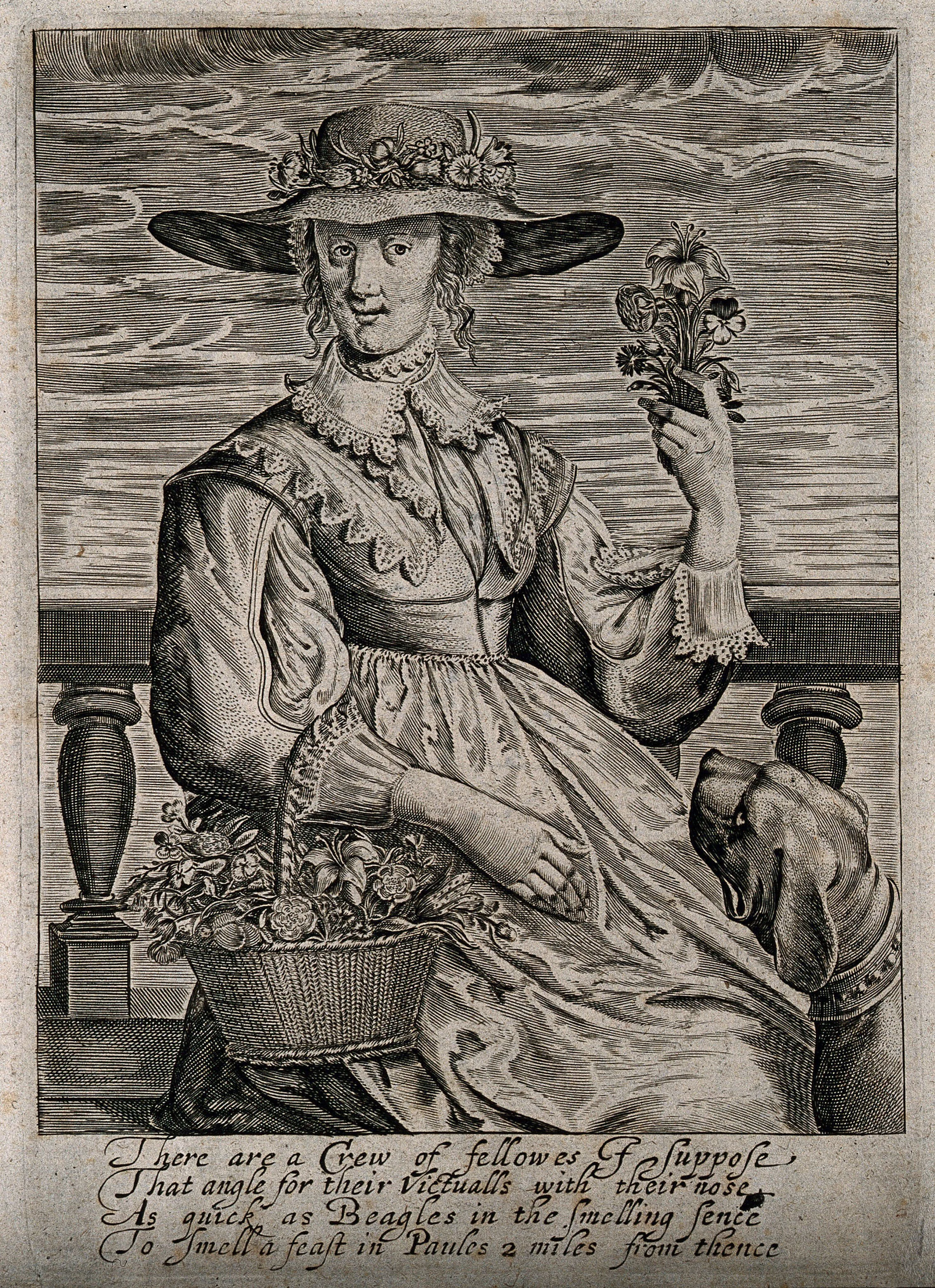
3) A woman with some flowers; representing the sense of smell. Engraving, 16--. Wellcome Collection.
4) Five types of Iris species flowering stems. Coloured lithograph. Wellcome Collection.
5) Mugwort Artemisia vulgaris flowering stem. Watercolour. Wellcome Collection
6) Pennyroyal Mentha pulegium and creeping thyme Thymus serpyllum entire flowering plants. Coloured etching by C. Pierre, c. 1865, after P. Naudin. Wellcome Collection.
7) Instrumenta chyrurgiae et icones anathomicae [Ambroise Paré]. Wellcome Collection.
Image credits (below):
1) Unique cyanotype (detail from large piece) of colour etching digital image, toned in rosemary. Two flowering plants burnet (Sanguisorba officinalis) and lady’s mantle (Alchemilla vulgaris). Coloured etching by C. Pierre, c. 1865, after P. Naudin. Source: Wellcome Collection.
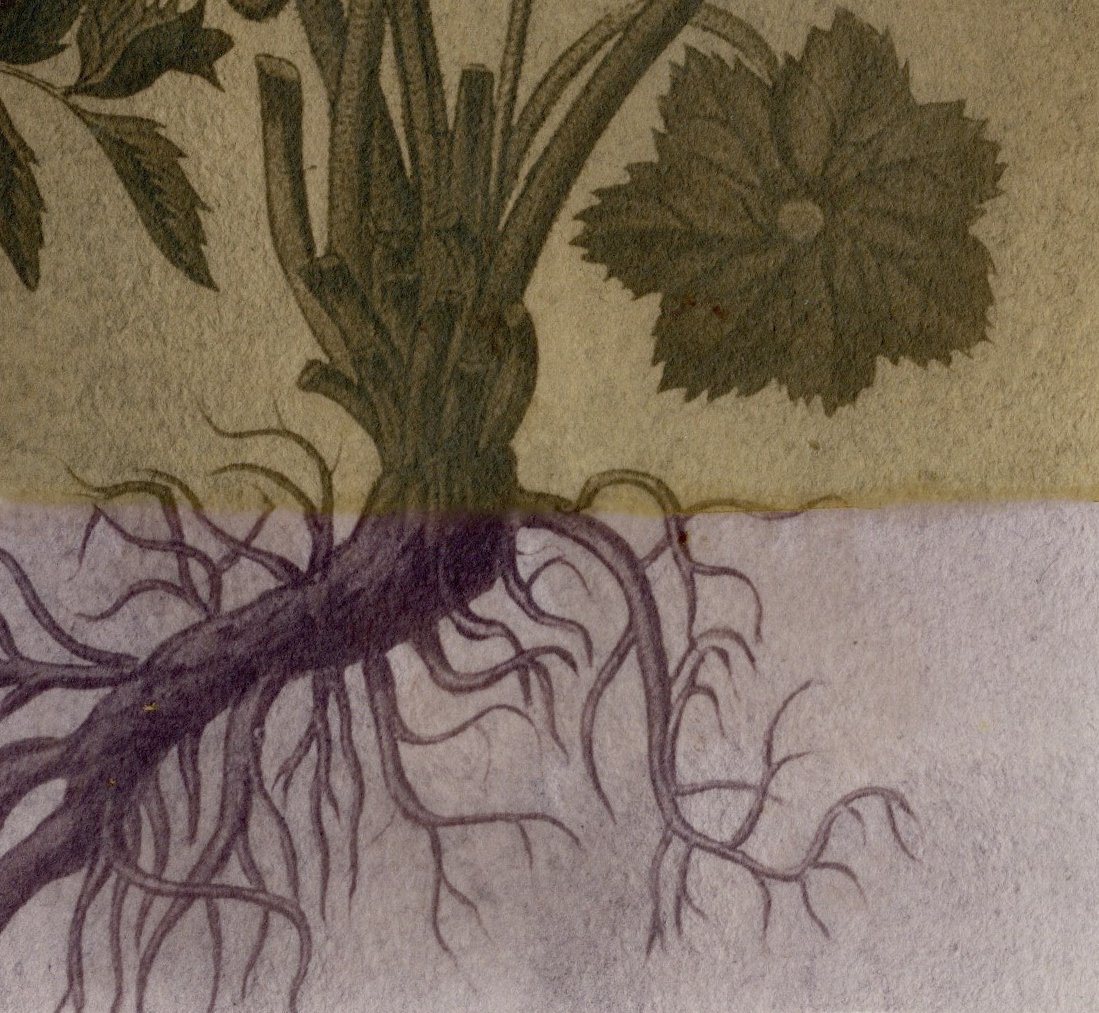
2) Unique cyanotype (detail) of coloured etching digital image from the collection, half toned in camomile, the other half with green tea. [Digital image: Two flowering plants burnet (Sanguisorba officinalis) and lady’s mantle (Alchemilla vulgaris). Coloured etching by C. Pierre, c. 1865, after P. Naudin. Source: Wellcome Collection.]
3) Unique cyanotype toned in rosemary using original digital image: Obstetric speculum, Coxeter. Wellcome Collection.
4) Experimenting with different toners using a small cyanotype made from a digital image from ‘Portrait of Louisa Martindale. President of the Med. Womens Fed. (1930-1932)’. Wellcome Collection.
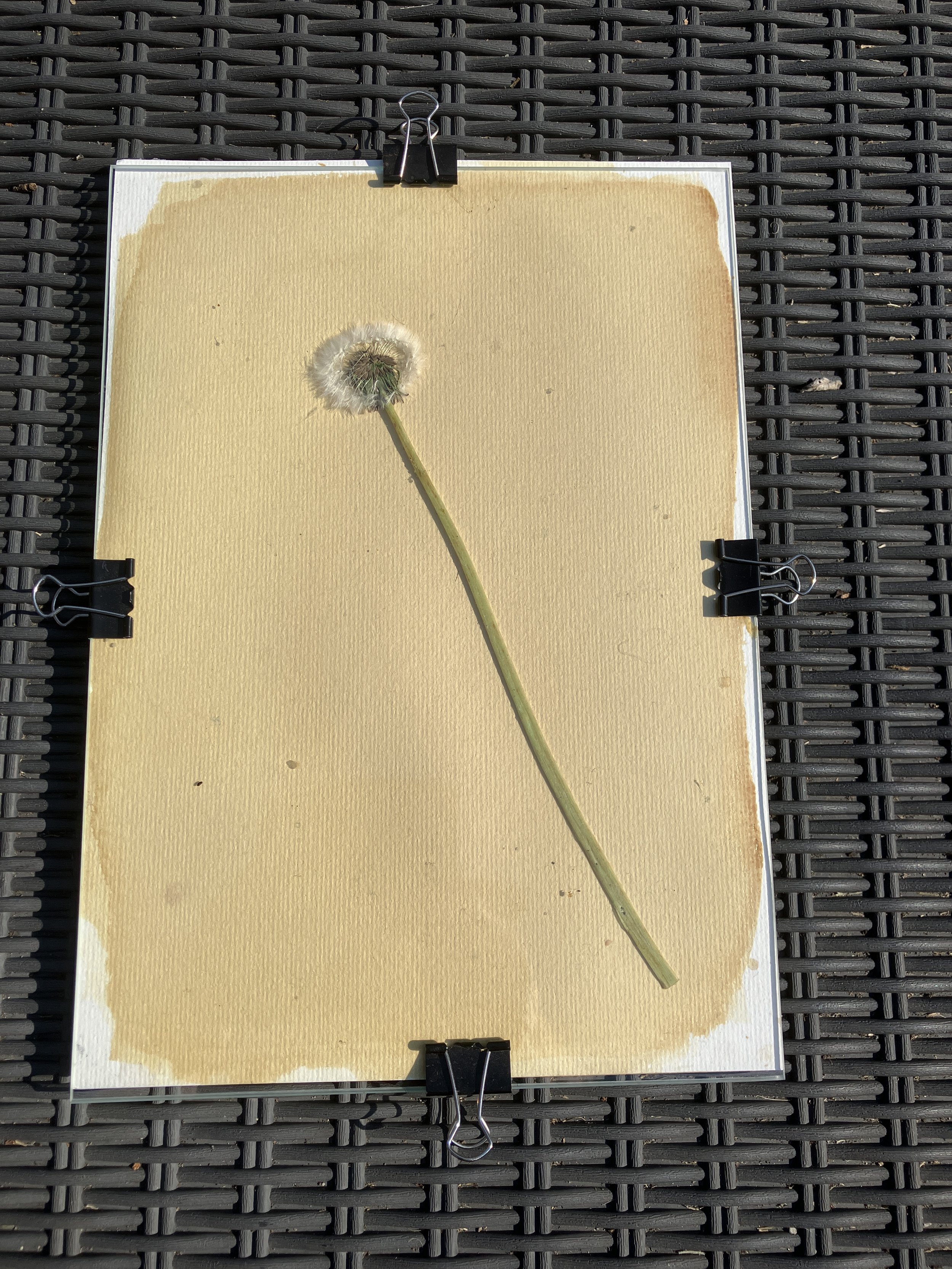
5) Experimenting with pomegranate emulsion anthotype using a single dandelion clock. Testing exposure time.
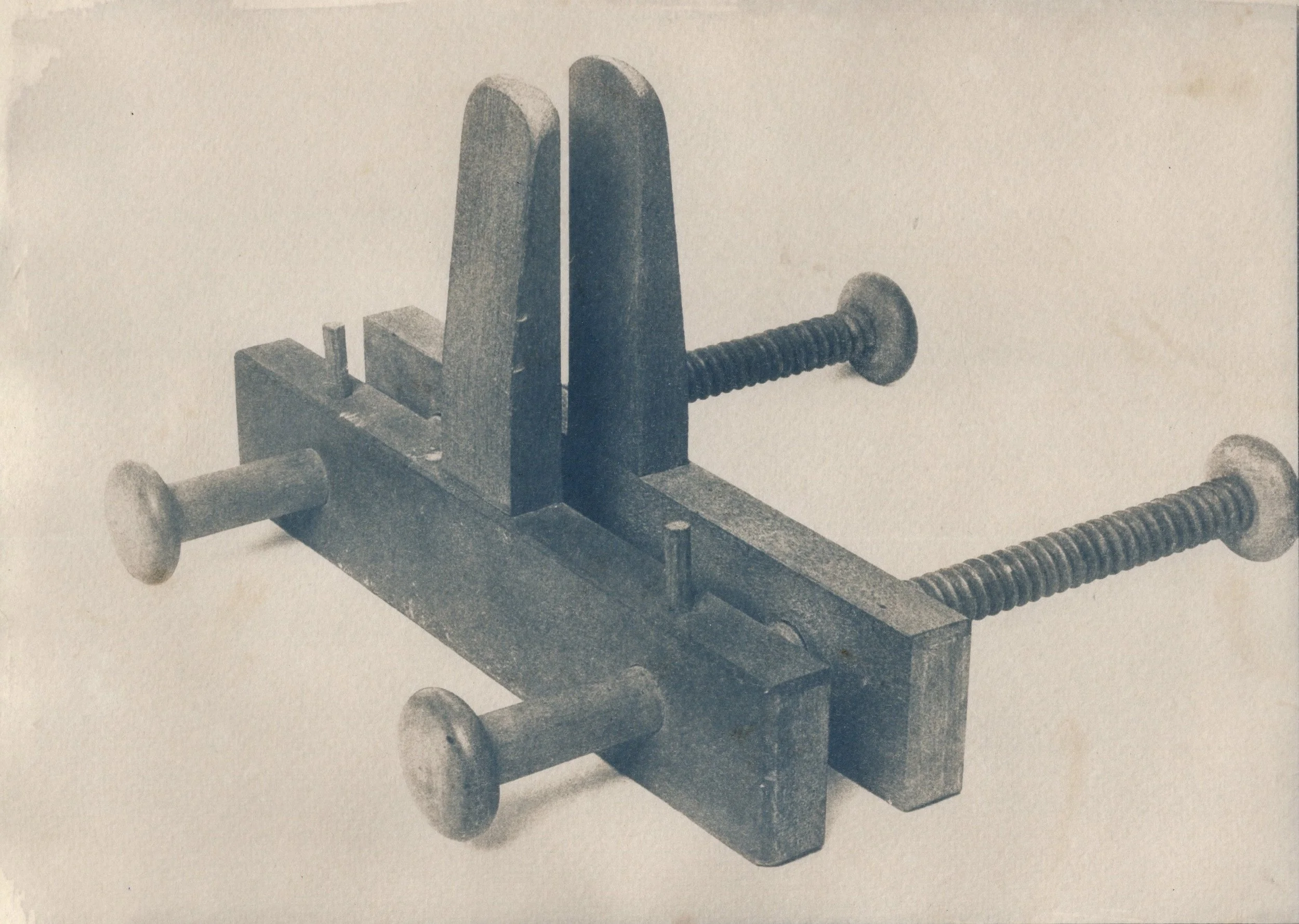
6) Unique cyanotype toned in red sage using original image: Speculum: wood. Reconstruction of Abulcasis (A.D. 936-1013). Wellcome Collection.
7) Unique cyanotype toned in camomile using original image: Nouvelle méthode de traiter les maladies vénériennes, par la fumigation: avec les procès-verbaux des guérisons opérés / [Pierre Lalouette]. Wellcome Collection.



Cyanotype animation toned in two sage varieties.