



field notes: votives research and online session
We’ve been researching votives and especially votives for healing as part of our ‘cruising the collection’ activities on the project. We’re also going to be making our own votives with ceramicist Bev Mayer in a couple of weeks. These will be inspired by the individual lived experience of group members (and also our research into herbal remedies). Collectively, they will form a unique group piece, telling the story of gynae inequities as a whole and sharing that we are ‘more than our parts’.
We held our first online session of 2026 in February, to chat more about votives and what we wanted to make. Our online sessions are intended for further exploration of the collection and to inspire creativity through conversation.
The notes below are from that session, and include some ‘top facts’ about votives (with thanks to Julia and Eris, my Wellcome Collection colleagues).
What have we found out about votives in the Greek and Roman world?
Greek and Roman religion was generally transactional: you visit a sacred space, ask for something, and leave a votive offering; or say thank you for something with an offering. The Latin word 'votum' means 'vow'.
Votive offerings could be simple and generic (e.g. water) or more specific and symbolic (e.g. asking for a good harvest with an offering of grain).
They were kept on display in many sacred spaces for religious, social, and economic reasons.
Some worshippers brought/made their own votives, but you could also buy them at temples or elsewhere.
What do we know about religion and healing in the Greek and Roman world?
Some people believed that ill health was a form of punishment by the gods, both collectively (e.g. plague) and individually (e.g. broken leg).
Similar to votive offerings, a person’s punishment could be linked to their ‘crime’ (e.g. men lose their sight after spying on goddesses whilst they’re bathing).
You could use votive offerings to ask the god for forgiveness, or for good health in general, or to be cured from a particular illness or injury.
The main gods associated with healing and health were Asclepius and his daughter Hygeia, whose name means health.
You could be healed in sanctuaries dedicated to Asclepius, including places where the gods healed you in your dreams.
What do we know about anatomical votives?
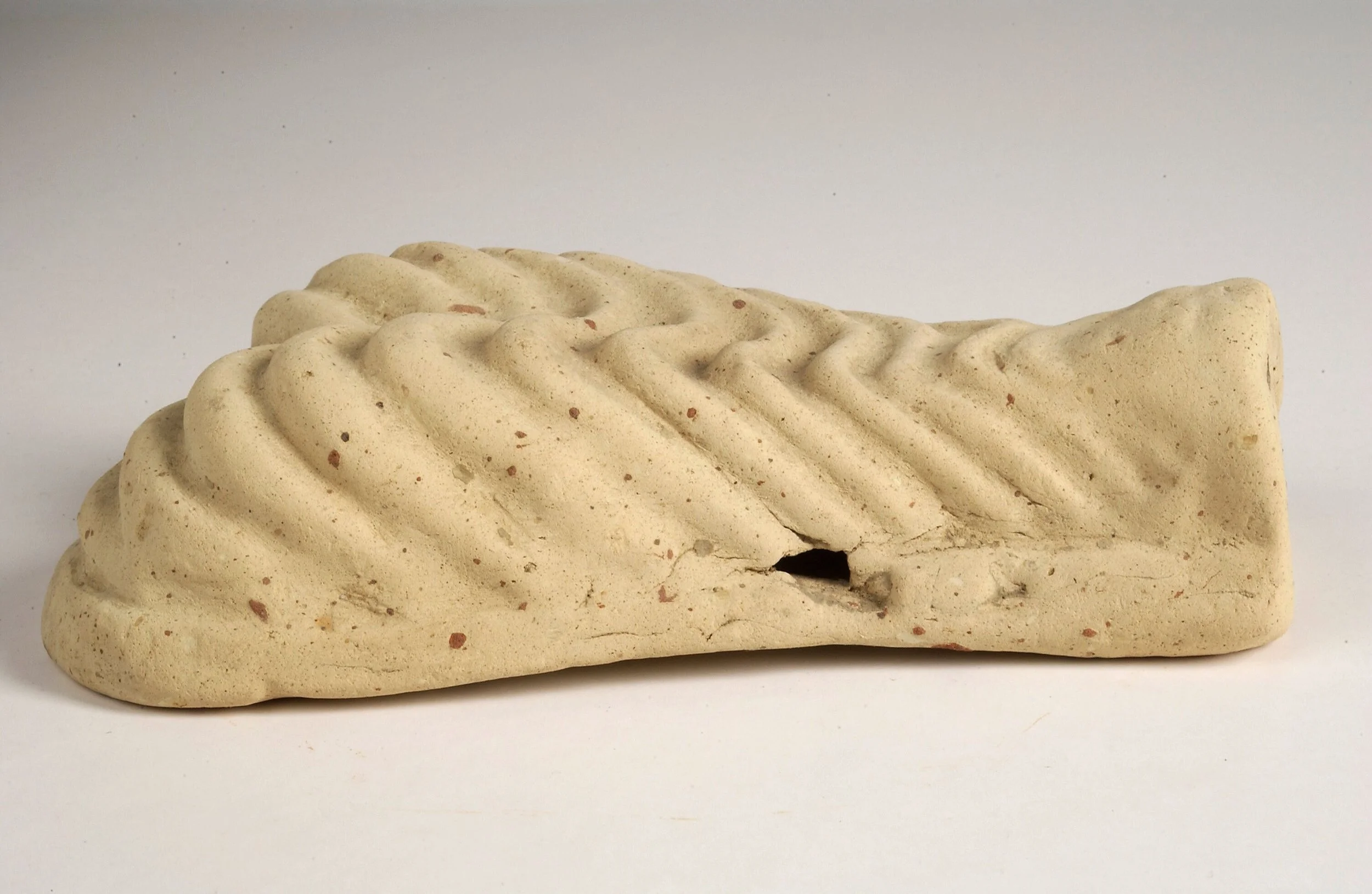
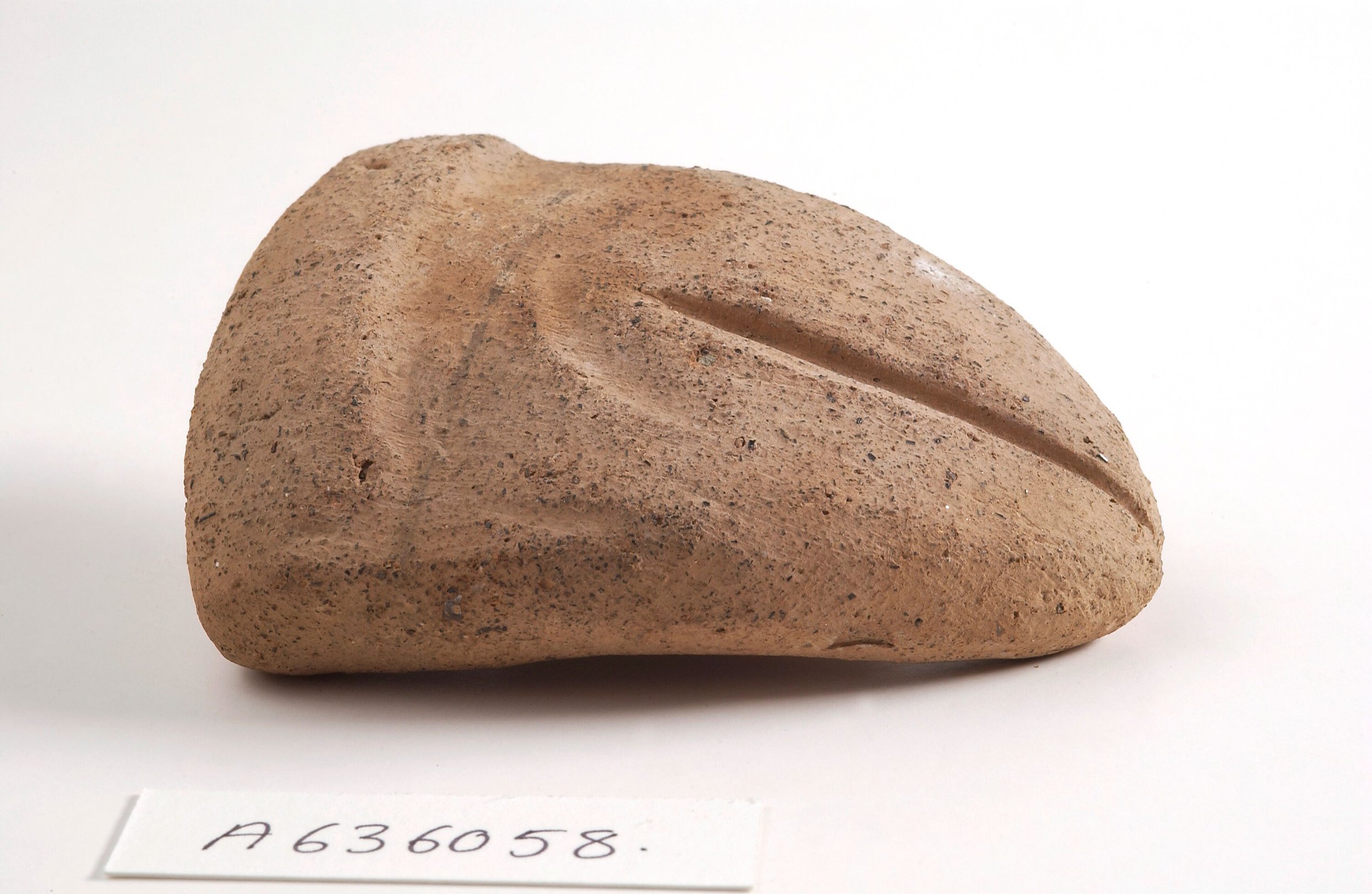
The majority of anatomical votives represent exterior body parts (e.g. legs, hands, breasts, ears, eyes); but internal and more intimate body parts exist too (e.g. uterus, vulva, penis, intestines etc.) We’ve been looking at the gynae votives like this on our project. They’ve already inspired some of our cyanotype work.
Most anatomical votives were originally displayed on altars, walls or the general vicinity in temples and sanctuaries associated with healing; like other votives, this visibility is part of religion. Like other votives, some people had their votives made specially and some people bought generic votives from shops near the temple.
We rarely know about the people behind the votives; examples with text are rare and, even then, they usually don’t tell us about what the person was experiencing.
The meanings behind votives are debated, but most academic debate has neglected the people behind the votives. We’re hoping to put this right.
What do we know about gynae votives?
Like other anatomical votives, most gynae votives don’t include details from the people who dedicated them.
Many academics originally thought that they were only connected to reproductive health.
More recently, academics have connected them to gynae diseases and conditions, as well as ideas about non-normative bodies – but a lot of this debate focuses on the medical aspects of the votives, rather than social or cultural.
Few people (academic or otherwise) have approached them through an LGBTQ+ lens and thought about the range of different people behind these objects and what their experiences might have been. This is another reason we’re keen to incorporate votives in our creative work.
How did they end up in the Wellcome Collection?
Henry Wellcome (and his staff) collected over 1 million objects between 1890-1936, including anatomical votives.
The votive vulva we’ve been looking at on our project entered Wellcome’s collection in 1930 alongside dozens of other anatomical votives.
The Wellcome usually have no more information about where the votives came from, but we know when this vulva entered the collection because the object was recorded in an accession register, which provides a record of what entered the collection and when.
Wellcome had been collecting anatomical votives for many years and saw them as a key part of medical history.
Most academics say that collectors didn’t publicly display anatomical votives and preferred ‘secret cabinets’ for what they believed were sexualized objects.
Wellcome was different: he displayed anatomical votives in his historical medical museum from 1913. However, these displays were designed to show a hierarchy of medical knowledge, which often prioritised health professionals and famous healers, rather than the real people behind the votives.
A lot of the ancient votives we’ve looked at came from the collection of the former opera singer Evangelista Gorga (1865-1957) who gave up opera singing in 1899 to concentrate on his collecting. Wellcome purchased part of the Gorga collection for £8000 in 1936, the year of his death. Apparently, Gorga’s medical collection was so vast it filled ten apartments in and around Rome and Wellcome feared it might form the basis of a museum to rival his own. While a large part of his collection (specifically musical instruments and archaeological finds) eventually went to the Italian Government and the Galleria Borghese, the medical and votive items became a core part of the Wellcome Collection. Gorga originally wanted £32,000 for it but Wellcome’s Italian agent managed to haggle him down to a mere £8000 - Gorga was facing creditors and anxious to keep his collection together and was eventually persuaded to sell. The negotiations went on between 1912 and 1923: seemingly Gorga was reluctant to sell for some time. Wellcome asked to borrow some of his collection for his display at the Wellcome Historical Medical Museum in 1913 when it was on Wigmore Street (not Euston Road) – further negotiations in getting the enormous collection out of Italy took some time apparently.
This is the view of the Hall of Statuary at the Wellcome Historical Medical Museum, 1913, here, with a Greek shrine in the middle with multiple votives, including anatomical ones.
This black and white photograph shows the ‘Hall of Statuary’ as adapted for the Library (now the Reading Room where our display will be), c. 1960.
The collection wasn’t just ancient ceramic votives - it also included 24 small ex-voto oil paintings dating from 1780 to 1906 taken from the church of Sant’Agostino in Rome.
Most of the paintings are offerings to the Madonna del Parto, a statue by Jacopo Sansovino, which is still in that church today, and many include a small image of the statue. They represent patients being cured from all manner of ills and each often included a small image of the patron saint. The lettering PGR means Per grazia ricevuta (for Grace Received).
The paintings were originally hung around or near the statue in the church and were periodically cleared or thinned out by the priests, who disposed of them to Gorga or to an intermediary. These are known as 'ex-voto’ paintings – ex voto was Latin for 'from the vow made’, meaning in gratitude to – they were commissioned by Catholics as a form of religious thanks for when good fortune and health were restored or in gratitude or devotion. The term is usually restricted to Christian examples. Essentially, all ex-votos are votives, but the term ex-voto highlights the explicit fulfilment of a prior vow.
Once gifted to a church or sacred place, an ex-voto is not supposed to be removed from that location unless the church has been deconsecrated.
What’s interesting about these paintings is that they are created by self-taught local artisans, donated by often nameless worshippers (though some paintings do name them) and accidentally curated by devoted pilgrims.
Gorga was also the collector behind the Graeco-Roman votives we have been looking at.
This is how these types of votives were intended to be displayed – together in a site of sanctuary to enable those who had commissioned them to come and pray for healing for their loved one, or as a reminder to others of the healing power of the process of votive making.
This photo show the ex-votos now at the Ethnographic Museum in Palermo, Sicily in 1929.
Mexican votives are usually on tin and depict the moment of personal humility when an individual asks for help and is delivered from disaster and sometimes death. They were offered as modest gifts of thanks to God, in a similar way to the Greek and Roman votives. They record for posterity the events of everyday life by people whom History seldom includes as anything more than a register of births, marriages and deaths.
Votive works were probably first brought into Mexico by Spanish soldiers at the time of the Conquest. Saints were established by town governors and votive paintings replaced amulets, which were considered by the Inquisition to be too close to magic.
The emergence of ‘the paintings of the miracles of everyday life’ eventually replaced the powerful church driven images of the saints.
Mexican votive paintings are believed to have influenced the work of artists Frida Kahlo and Diego Rivera, who created a beautiful collection of their own, which is now on permanent display in their house in Mexico City.
This is a picture of a votive found at Golgoi in Cyprus. It’s a stone relief showing – we think – 2 healthy breasts at the top, and a diseased breast with multiple tumours at the bottom. We can only assume why this was commissioned, presumably by a person experiencing breast cancer. Like all Greek and Roman examples, it would have been presented to the local temple in the hope of a cure. The photograph dates to 1946 so perhaps it was discovered around that time.
What else have we found out?
We’ve found unusual votives in the collection including three ex-voto offered by patients suffering from uterine pain.The spikes on the sea urchin and hedgehog might suggest the pain experienced by the person who commissioned them in relation to their gynae condition. They appear to be from a publication – the date in the catalogue record says 11 July 1934.
From the 16th century to the 19th century, other versions of votive offerings appeared in Europe and in South America – these were linked to Catholic belief and offered in similar ways to the ancient votives, as a form of healing this time to the Church.
Smaller personal objects could also be used or worn made of natural or man-made material – these tend to be called ‘amulets’ and these were believed to hold a magical power that could protect the owner from sickness or misfortune – these appear across cultures.
Amulets were small personal objects – either natural or man-made – and believed to hold the magical power for protection, good fortune or healing – they were often worn on the body as jewellery and were used across cultures but they could also be used like this Sudanese one bearing extracts from the Qu’ran.
An amulet is a personal object, natural or man-made, believed to hold magical power for protection, good fortune, or healing, often worn as jewellery or carried, with its efficacy stemming from its material, shape, symbols, or origin, and used across diverse cultures for millennia.
This is an amulet in the form of beaten gold lips, also found in Cyprus and believed to be of Mycenean origin (a period in ancient Greece). It bears holes at each edge as if it were hooked onto a thread or necklace and worn around the neck. Unlike votives, which were presented at temples, this was probably used as a funerary amulet. These, along with other similar gold-foil mouth covering amulets found in Egypt (often described as golden tongues or lips), were placed in the mouths of the deceased during mummification.
We’ll be sharing more on our votive creative work soon. Watch this space!
———————————————————————————————————————————————————————————————————
This participatory research and socially engaged project is being delivered in collaboration with the Wellcome Collection.
Image credits (above):
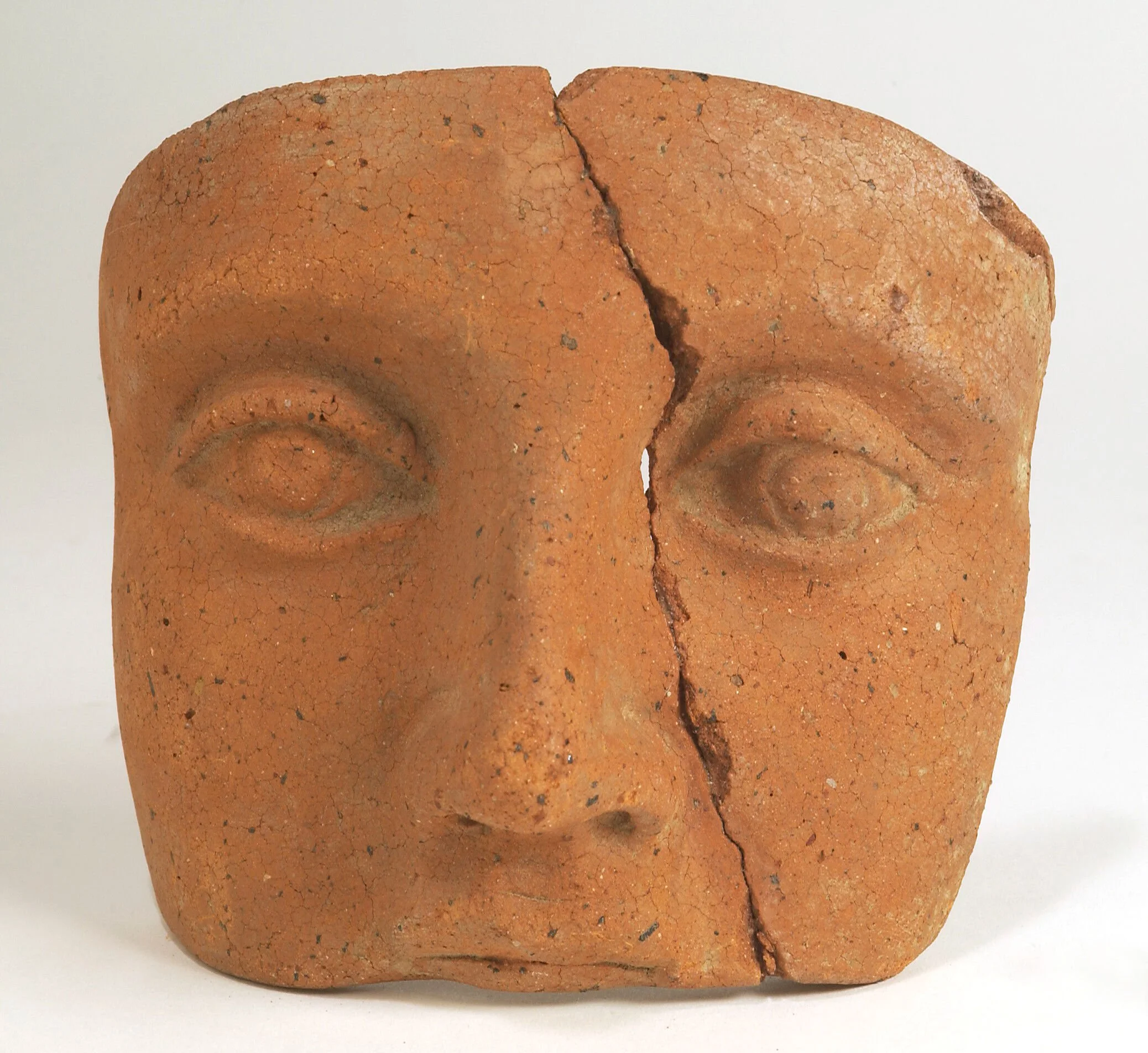
A clay-backed face. Roman votive offering. Wellcome Collection.
Sioux Indian amulet in the form of a turtle, worn by girls to ward off illness. Said to contain the umbilical cord of the wearer. Decorated in beading. Northern Plains. Wellcome Collection.
Beaten gold lips, found in Cyprus, supposed to ba a Mycenean amulet. Wellcome Collection.
A clay-baked vulvas. Roman votive offering. Wellcome Collection.
A clay-baked uterus. Roman votive offering. Wellcome Collection.
Clay-baked teeth. Roman votive offering. Wellcome Collection.